
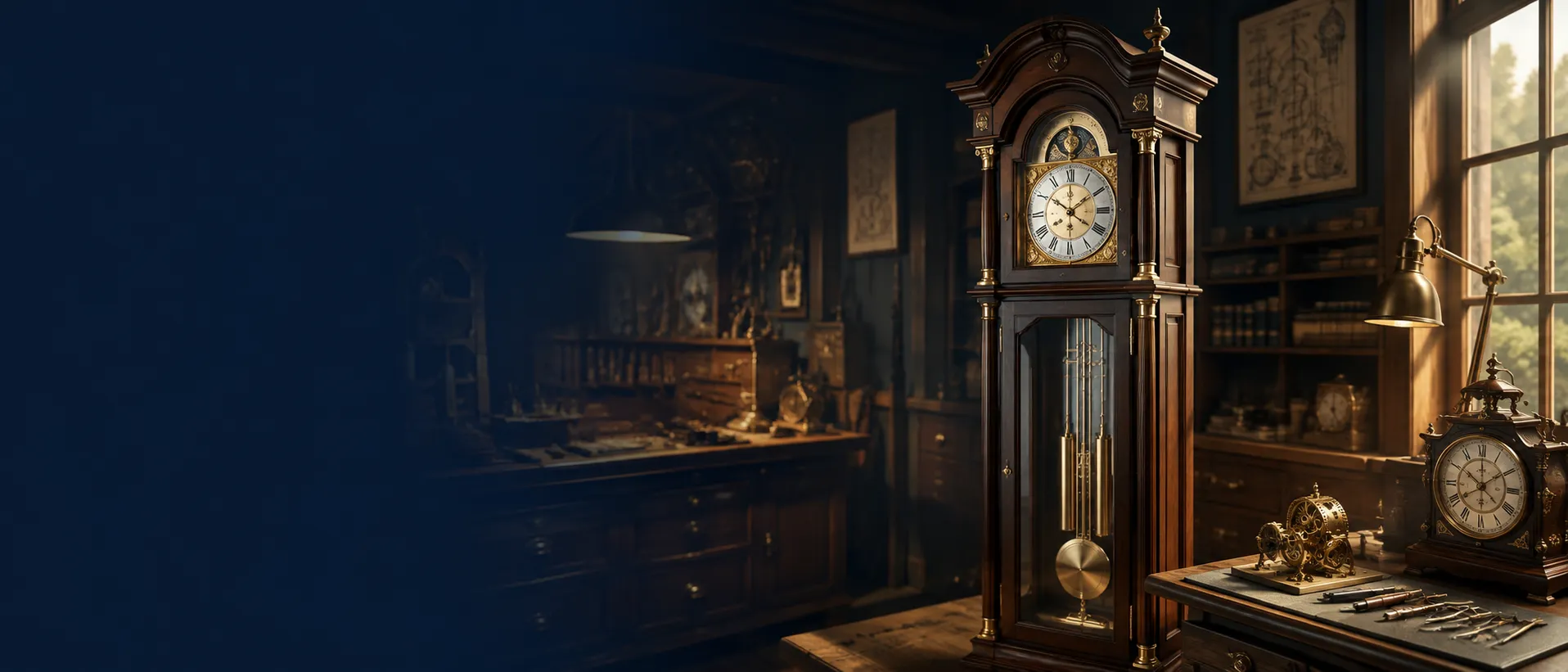
Mechanical Clock depends on a combination of maker, age, model, movement, originality, condition, provenance and current demand. A directory or online estimator can help organize those factors, but it cannot authenticate a clock or replace an in-person appraisal. Photograph labels and movement markings before cleaning, refinishing or replacing parts that could affect originality.
What drives clock value
Value for a mechanical clock can be influenced by maker, model, age, rarity, movement quality, case material, originality, condition, provenance and current buyer demand. A famous maker name does not guarantee a high value, and an unidentified clock is not automatically low-value. Authentication and exact model identification matter.
Document before you alter
Photograph the front, back, movement, labels, signatures, serial numbers, paper labels and any restoration marks. Avoid aggressive polishing, refinishing or replacement parts until you know whether originality contributes to value. Keep receipts and repair records; provenance can be useful context for a future appraisal.
Condition and repair history
A clock that runs is not necessarily mechanically healthy, and a non-running clock is not necessarily valueless. Wear, missing parts, case damage, dial condition and prior modifications all matter. A professional condition report can separate normal service needs from structural problems that change the restoration decision.
Online estimate vs appraisal
An online estimator is useful for triage: deciding whether to research a maker, request a repair quote or seek an appraisal. It cannot inspect the movement, authenticate materials or judge subtle restoration. For insurance, estate, sale or a potentially significant antique, use a qualified in-person appraisal or specialist opinion.
Frequently asked questions
Do they still make mechanical clocks?
Treat mechanical clock as a diagnosis problem rather than a single fixed repair. Start with safe, reversible checks, document the symptoms, and use a specialist when the movement needs internal work or the clock has antique value.
Mechanical vs. Quartz Clocks: What's The Difference?
Use a known-good battery, confirm clean contacts and check that the hands are not touching. If the clock still does not run, the movement or electrical contacts may need diagnosis or replacement.
Who invented the first mechanical clock?
Treat mechanical clock as a diagnosis problem rather than a single fixed repair. Start with safe, reversible checks, document the symptoms, and use a specialist when the movement needs internal work or the clock has antique value.
How did old mechanical clocks work?
Treat mechanical clock as a diagnosis problem rather than a single fixed repair. Start with safe, reversible checks, document the symptoms, and use a specialist when the movement needs internal work or the clock has antique value.
What is the best mechanical clock?
Treat mechanical clock as a diagnosis problem rather than a single fixed repair. Start with safe, reversible checks, document the symptoms, and use a specialist when the movement needs internal work or the clock has antique value.
Research references
ChronoCrafter used these pages as part of the SERP research set for this topic. They are references, not endorsements, and current service or pricing claims should be verified directly.
- clockworks.com — reference page observed during topic research.
- museum.seiko.co.jp — reference page observed during topic research.
- timelyandtimeless.com — reference page observed during topic research.
- en.wikipedia.org — reference page observed during topic research.
- keilsclockshop.com — reference page observed during topic research.
Continue your research
Need a clock repair specialist?
Use the ChronoCrafter directory to compare local clockmakers, then confirm the service scope, current quote and appointment details directly with the provider.